Overview
The aTc → IV-HSL Responder Implementation combines the TetR-aTc Detector Module and the IV-HSL Emitter Module (Smith, Hartmann, and Booth., 2023) to produce a synthetic cell that generates isovaleryl-l-homoserine lactone (IV-HSL; Lindemann et al., 2011) in response to anhydrotetracycline (aTc; Lutz and Bujard, 1997). The module is implemented as a single genetic construct encoding the BjaI enzyme under control of the tet operator. A co-cultured E. coli receiver strain carrying bjaR-GFP-native reports IV-HSL production by expressing GFP.
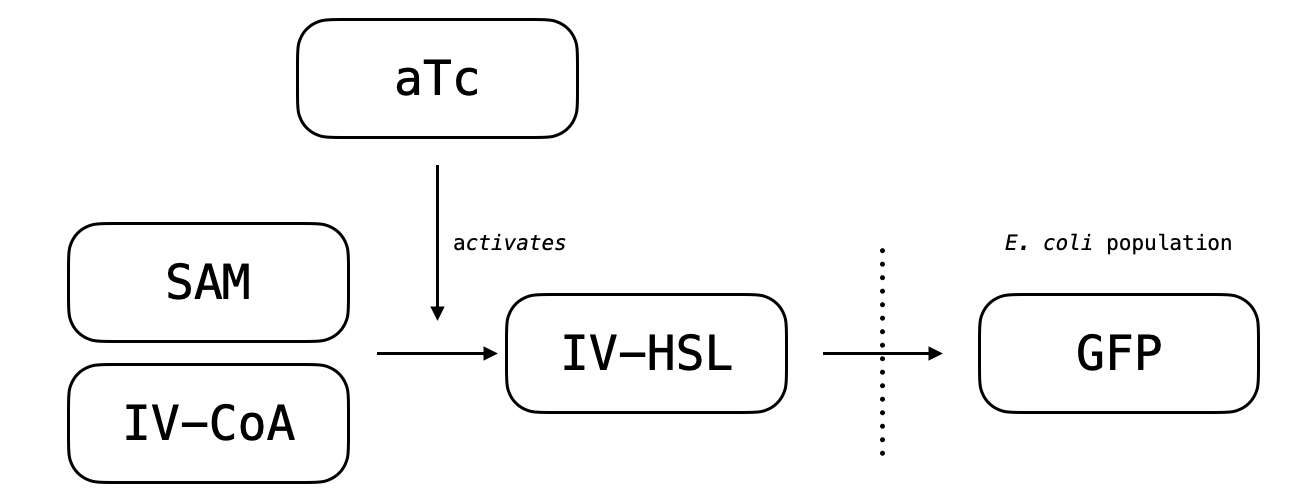
aTc activates BjaI expression by relieving TetR repression. BjaI converts SAM and IV-CoA into IV-HSL, which diffuses to co-cultured E. coli receiver cells and induces GFP expression.
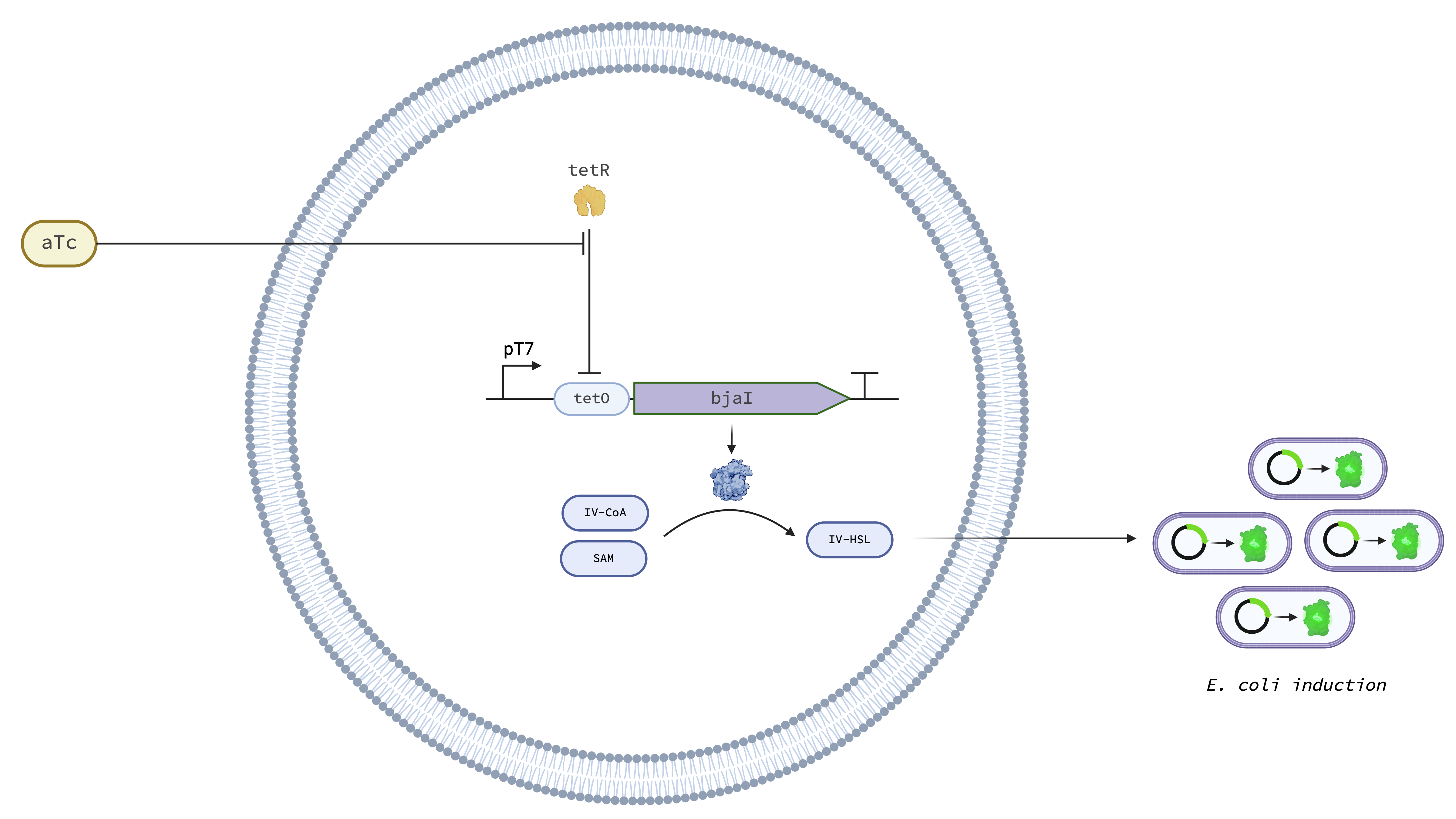
The aTc → IV-HSL Responder in the Base Cell. aTc enters the cell and releases TetR from the tetO operator, allowing BjaI expression. BjaI produces IV-HSL from SAM and IV-CoA; IV-HSL diffuses to neighboring E. coli receiver cells.
Cytosols
Three construct variants were evaluated: pT7-tetO-bjaI (single operator), tetO-pT7-tetO-bjaI (sandwich operator), and pT7-tetO-tetO-bjaI (train operator). pT7-tetO-bjaI has poor dynamic range — leaky expression in the off state produces sufficient IV-HSL to induce receiving E. coli cells. tetO-pT7-tetO-bjaI and pT7-tetO-tetO-bjaI resolve this by providing tight repression in the off state (Lutz and Bujard, 1997). We chose to move forward with pT7-tetO-tetO-bjaI.
Usage
The responder module is assembled within a standard PURE reaction, following Assemble Base Cytosol. Add equimolar amounts of the substrates SAM and IV-CoA at 0.3 µM and 0.08 µM final concentration, respectively.
DNA Parts
| Name | Length (bp) | File |
|---|---|---|
pT7-tetO-tetO-bjaI | 908 | pT7-tetO-tetO-bjaI.gb (linear) |
bjaR-GFP-native | 3877 | pOpen |
Protein Components
TetR purified protein — MedChemExpress HY-P71520, resuspended to 30 µM.
Cell Components
XL-10 Gold
Primers and PCR
| Name | Sequence | Tm full (°C) | Ta binding (°C) |
|---|---|---|---|
| tetO-pT7-tetO F | gacggccagttccctatcagtgatagagagcatgagacggtctcag | 72 | 64 |
| pT7-tetO-tetO F | aggagtaatacgactcactatagggtccctatcagtgatagagattgacaggtccctatc | 72 | 70 |
| M13 Reverse | caggaaacagctatgaccatg | 63 | 63 |
| Name | Vector | Primer F | Primer R | Anneal (°C) | Extension time (s) |
|---|---|---|---|---|---|
| tetO-pT7-tetO | pT7-tetO-bjaI | tetO-pT7-tetO F | M13 R | 64 | 25 |
| pT7-tetO-tetO | pT7-tetO-bjaI | pT7-tetO-tetO F | M13 R | 64 | 25 |
Reaction Construction
| Component | Samples (each) (µL) | Positive controls (each) (µL) | Negative control (µL) | Notes |
|---|---|---|---|---|
| PURE Solution A | 4 | 4 | 4 | PURE energy solution: small molecules |
| PURE Solution B | 3 | 3 | 3 | PURE proteins and ribosomes |
| RNase Inhibitor | 0.5 | 0.5 | 0.5 | Prevents RNase activity |
| Linear DNA (30 nM) | 0.2 | 0.2 | 0 | pT7-tetO-tetO-bjaI or variant |
| SAM (5 mM) | 0.6 | 0.6 | 0 | |
| IV-CoA (5 mM) | 0.16 | 0.6 | 0 | |
| TetR (30 µM) | 1.54 | 0 | 0 | Represses tetO-controlled BjaI expression |
| Nuclease-free water | 0 | 1.54 | 2.5 | |
| Total | 10 | 10 | 10 |
Experimental Method
Prepare M9 media containing cells and antibiotics:
Prepare M9 Media containing 1× M9 salts, 0.34 mg/mL 1-thiamine hydrochloride, 0.2% casamino acids, 2 mM MgSO₄, 100 µM CaCl₂ and 0.4% (w/v) glucose.
Use a pipette tip to scrape some of the frozen bacteria off of the top and inoculate a 1.5 mL eppendorf containing the M9 media with 100 µg/mL carbenicillin.
Gently mix the tube by inverting 5 times. The solution in the tube will be named M9-cell solution in the following part.
Incubate samples and controls containing PURE reactions at 37 °C for 1.5 h.
Mix varying amounts of samples or controls (between 1 µL and 2 µL) with 100 µL of the M9-cell solution.
Expected Performance
Induction of receiver E. coli
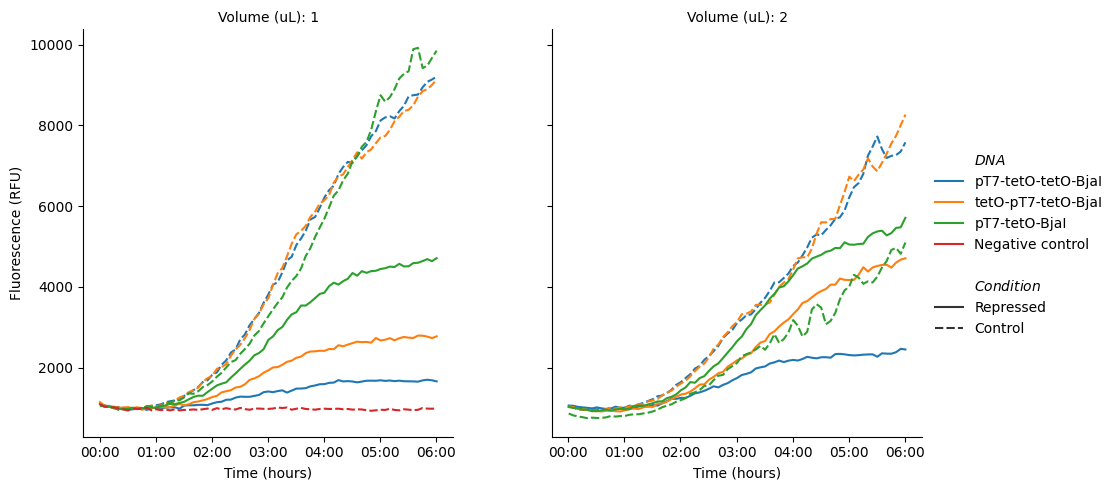
GFP induction kinetics in E. coli receiver cells carrying bjaR-GFP-native after addition of PURE reaction sample or control.
Repression Validation
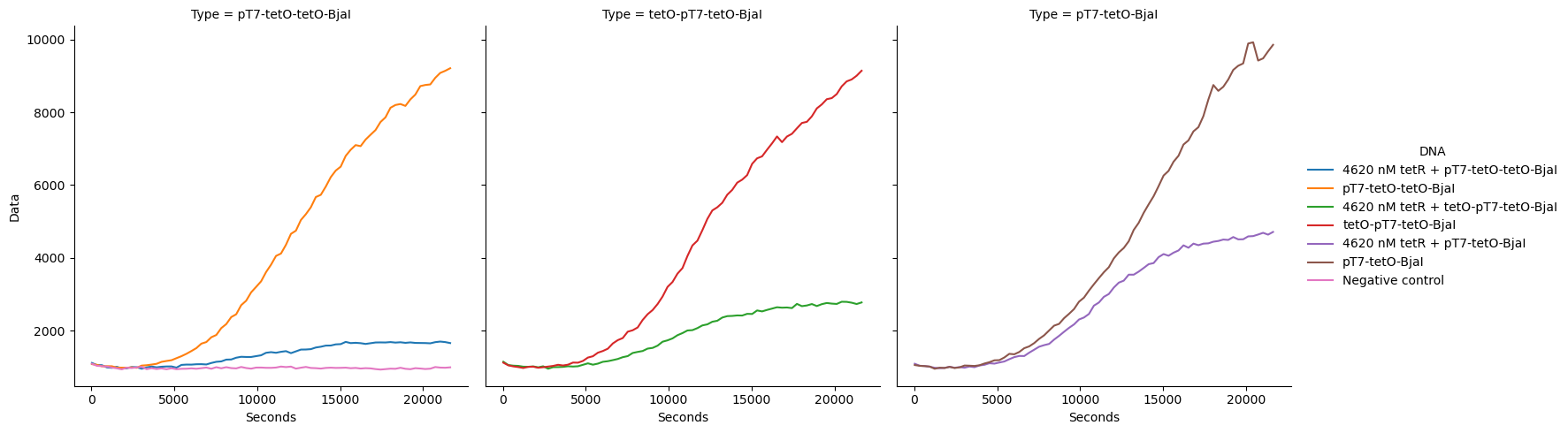
Repression of BjaI expression across three tetO construct variants. Positive controls contain no TetR.
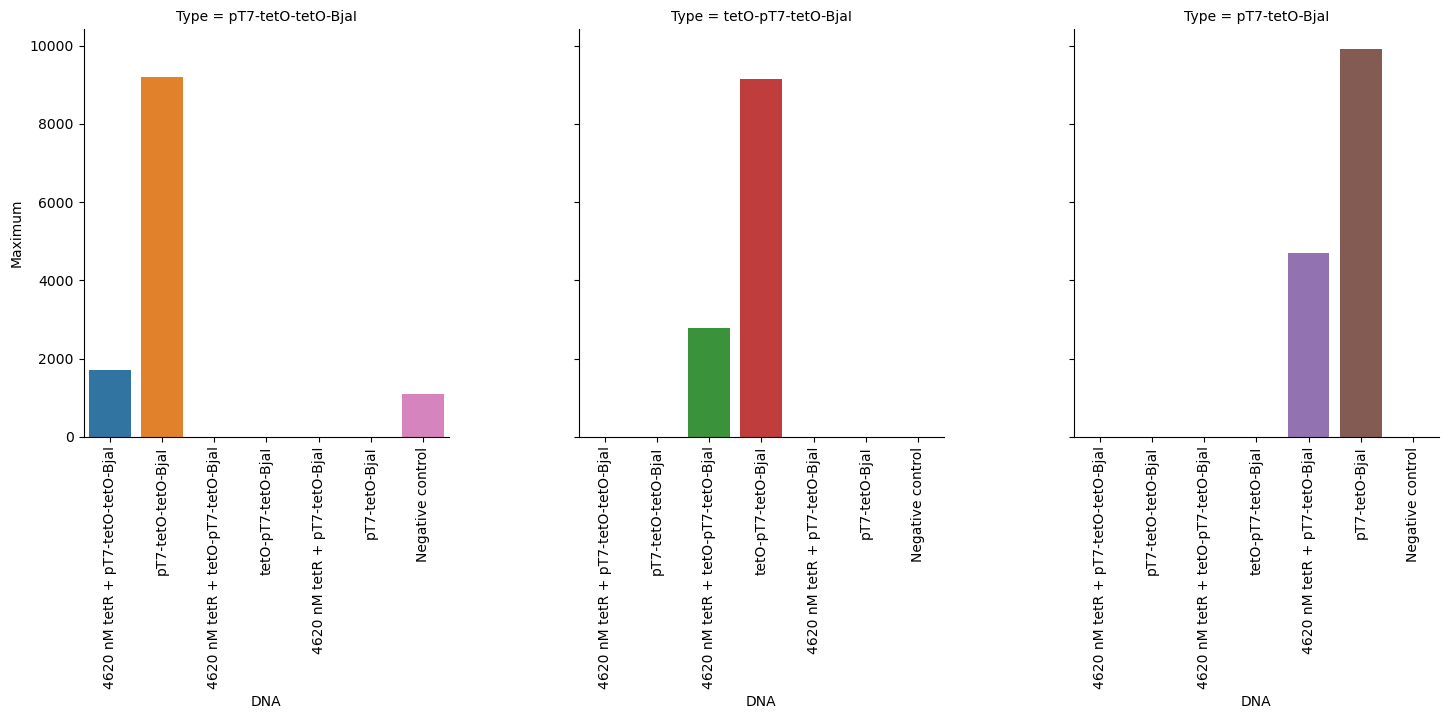
Endpoint GFP expression in E. coli receiver cells for each construct variant with and without TetR repressor.
Observations:
Positive controls (samples without any TetR) exhibited similar GFP fluorescence, indicating that all DNA constructs (
pT7-tetO-tetO-bjaI,tetO-pT7-tetO-bjaI, andpT7-tetO-bjaI) are effective for BjaI expression.Repression efficiency follows the order:
pT7-tetO-tetO-bjaI>tetO-pT7-tetO-bjaI>pT7-tetO-bjaI. Based on this,pT7-tetO-tetO-bjaIwas selected for use in the subsequent liposome experiment to construct the responder cells.
Cells
Responder Cells were constructed and co-cultured with E. coli containing the bjaR-GFP-native IV-HSL receiver plasmid. Time-series confocal microscopy (Revvity Operetta CLS) was performed over 6 h / collecting red (Rhodamine-B), green (GFP), and brightfield images at 40× magnification across multiple fields per well at approximately 15 min intervals.
Expected Performance
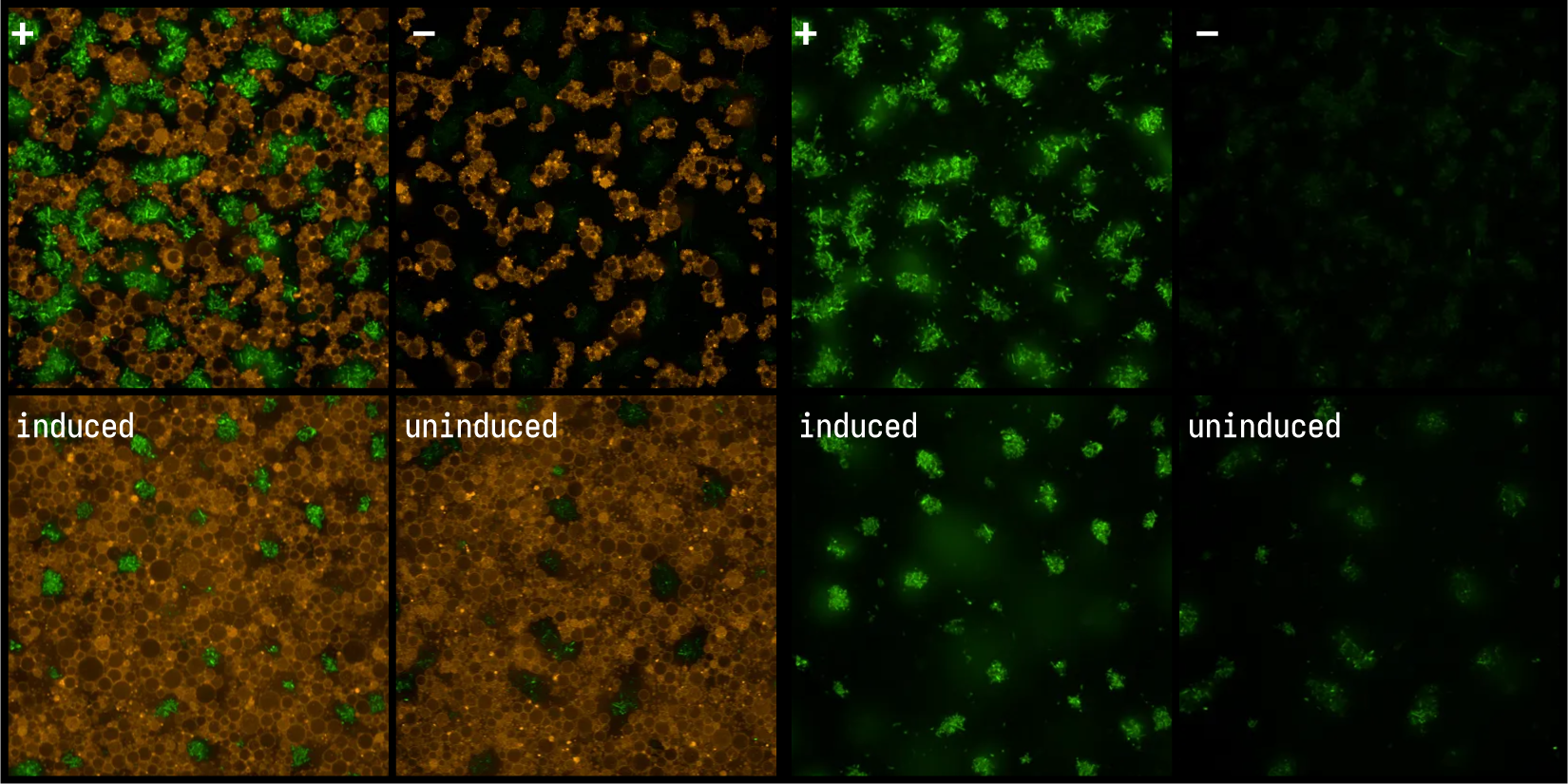
8 h endpoint images of EggPC liposomes containing PURE in M9 media. Left liposome (orange) and E. coli-expressed GFP (green) channels. Right E. coli-expressed GFP (green) channel. + positive control; − negative control (no DNA); induced responder cell module, induced with aTc in the outer solution; uninduced responder cell module, without inducer.
Timeseries microscopy (45 min to 360 min)
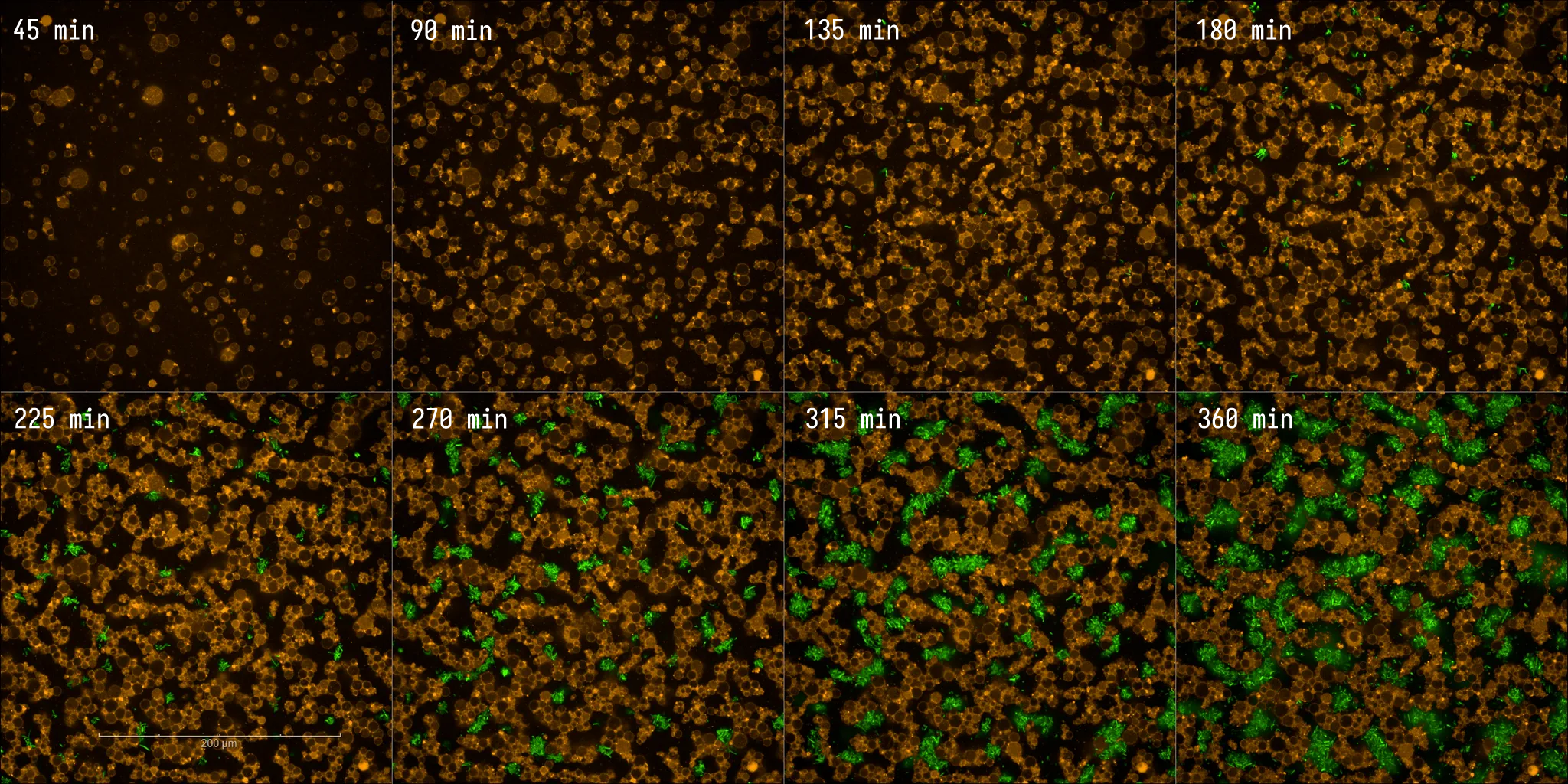
Responder Cell positive control timeseries. EggPC liposomes containing PURE + IV-HSL in M9 media; aTc induced. Liposome membrane (orange) and E. coli-expressed GFP (green).
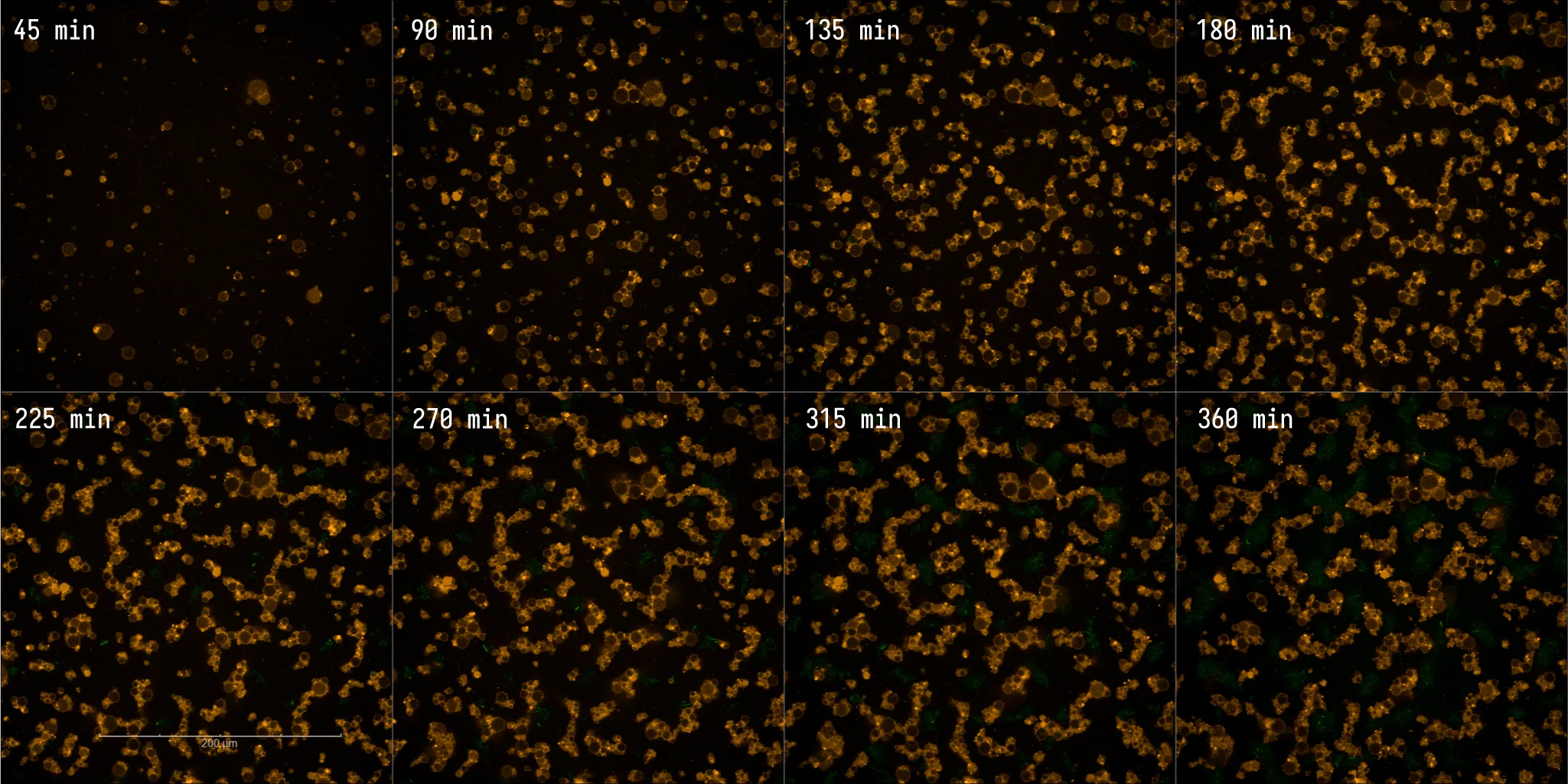
Responder Cell negative control timeseries. EggPC liposomes containing PURE in M9 media; aTc induced. Liposome membrane (orange) and E. coli-expressed GFP (green).
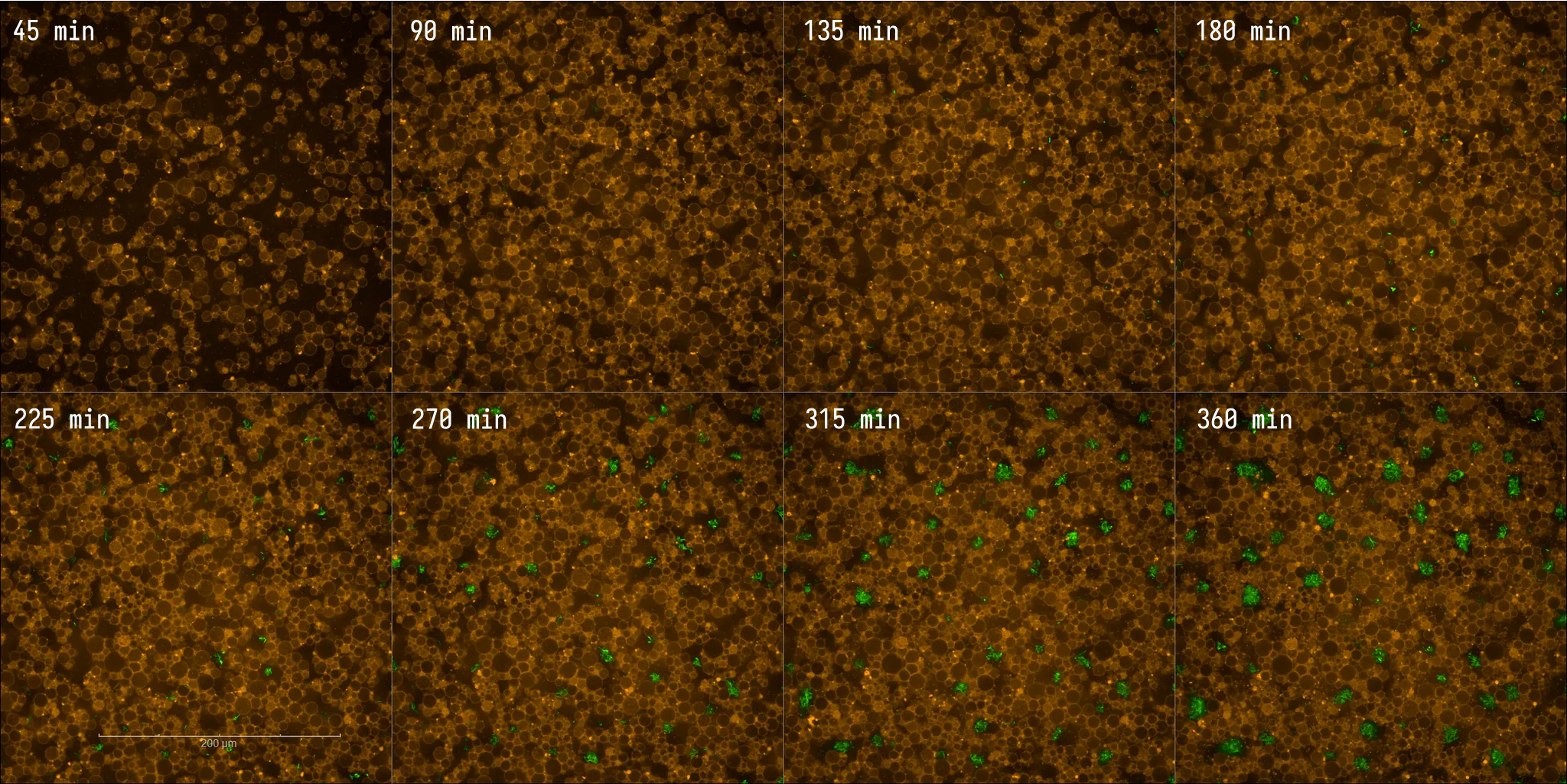
Responder Cell sample timeseries (induced). EggPC liposomes containing PURE, responder module DNA, IV-CoA and SAM, in M9 media; aTc induced. Liposome membrane (orange) and E. coli-expressed GFP (green).
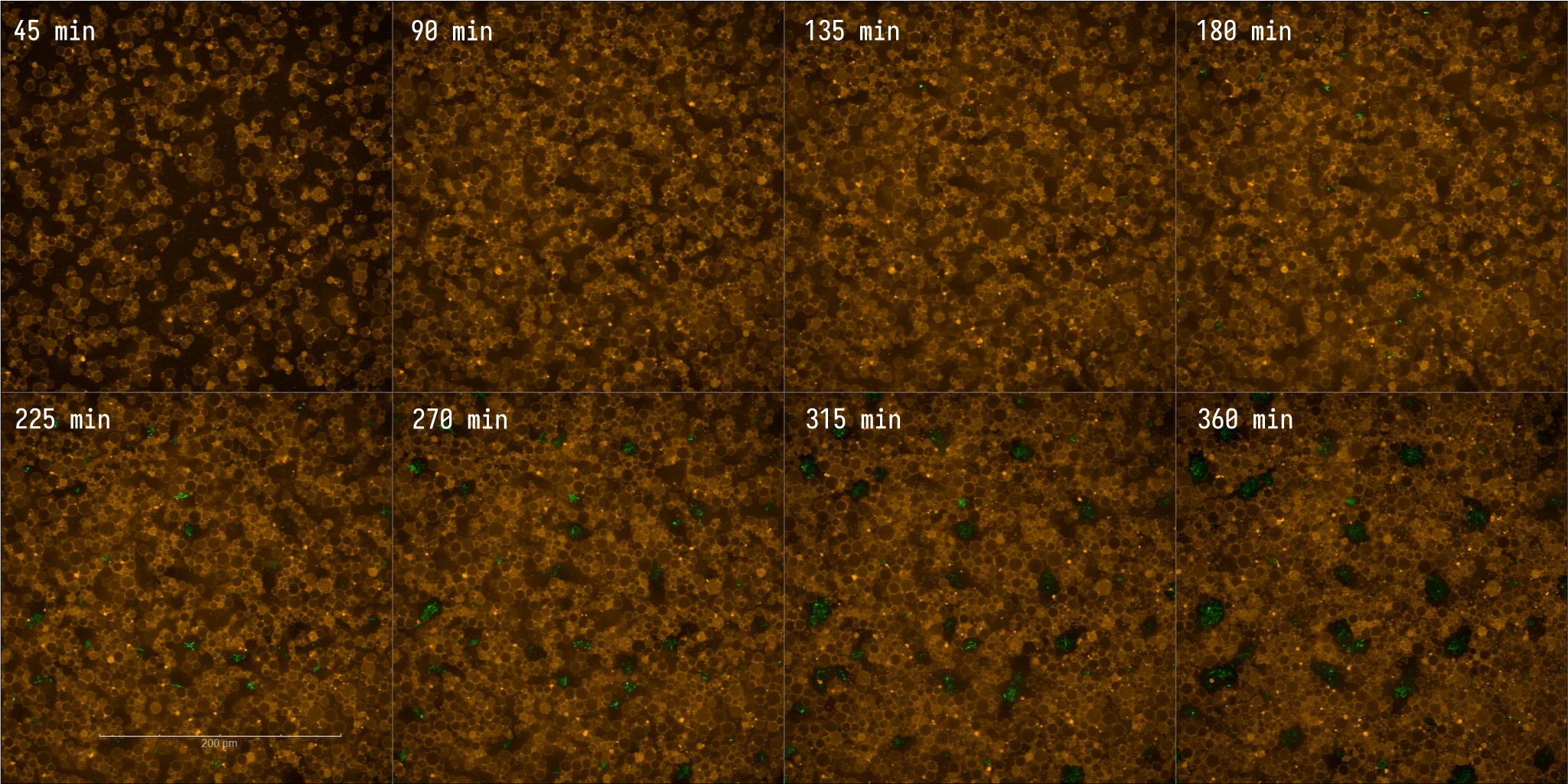
Responder Cell sample timeseries (uninduced). EggPC liposomes containing PURE, responder module DNA, IV-CoA and SAM, in M9 media. Liposome membrane (orange) and E. coli-expressed GFP (green).
Process
Modules
Credits
Jefferson Smith & Michael Booth (Oxford / UCL)
b.next
- Smith, J. M., Hartmann, D., & Booth, M. J. (2023). Engineering cellular communication between light-activated synthetic cells and bacteria. Nature Chemical Biology, 19(9), 1138–1146. 10.1038/s41589-023-01374-7
- Lindemann, A., Pessi, G., Schaefer, A. L., Mattmann, M. E., Christensen, Q. H., Kessler, A., Hennecke, H., Blackwell, H. E., Greenberg, E. P., & Harwood, C. S. (2011). Isovaleryl-homoserine lactone, an unusual branched-chain quorum-sensing signal from the soybean symbiont Bradyrhizobium japonicum. Proceedings of the National Academy of Sciences, 108(40), 16765–16770. 10.1073/pnas.1114125108
- Lutz, R. (1997). Independent and tight regulation of transcriptional units in Escherichia coli via the LacR/O, the TetR/O and AraC/I1-I2 regulatory elements. Nucleic Acids Research, 25(6), 1203–1210. 10.1093/nar/25.6.1203